Blog Home
Cyber Monday Discount is Live! Use code CYBER for $300 off any course
24
Days
03
Hours
33
Minutes
03
Seconds
✕
Cyber Monday Discount is Live! Use code CYBER for $300 off any course
✕
24Days
3Hours
33Mins
3Secs

Sports Management Worldwide Blog Subscribe to RSS - blogs

Andrew Gregor: Meet SMWW's New Soccer Scouting Instructor

Andrew Gregor: Meet SMWW's New Soccer Scouting Instructor
November 04, 2026 by Dr. Lynn Lashbrook

SHARE


What does it take to identify the next professional soccer star? Ask someone who has played the game, coached the game, developed professional talent, and made recruitment decisions for clubs in the United States and Europe.

Meet Andrew Gregor, the newest instructor in Sports Management Worldwide's Soccer Management & Scouting course.

A former MLS and USL professional player, head coach, head scout, and current Vice President of Recruitment at Pro Football Consultants, Gregor brings an exceptional combination of playing experience, coaching knowledge, and international recruitment expertise.

He's helped more than 20 players advance into first-team and professional contracts, built scouting operations, and advised a European first-division club.

Now, he's bringing that experience directly to aspiring soccer scouts, sporting directors, and front-office professionals through SMWW.

Who Is Andrew Gregor? From Professional Soccer Player to Recruitment Executive

Andrew Gregor is a former MLS and USL player, soccer coach, scouting executive, and international recruitment specialist who currently serves as Vice President of Recruitment at Pro Football Consultants.

Few professionals have experienced the soccer industry from as many perspectives.

Gregor's career has included:

  • Professional Soccer Player: Competed in Major League Soccer (MLS) and the United Soccer League (USL).

  • Head Coach: Gained firsthand experience developing players and making tactical decisions.

  • MLS Academy Talent Developer: Helped more than 20 players progress toward first-team and professional contracts.

  • Head Scout: Built recruitment strategies and directed domestic and international scouting operations.

  • European Soccer Advisor: Provided executive-level recruitment insight for a European first-division club.

  • VP of Recruitment: Developed relationships with clubs and sporting directors across the global soccer industry.

That background gives Gregor an understanding of what professional organizations look for when evaluating players.

He knows what it's like to be the player being evaluated, the coach developing that player, and the executive deciding whether that player deserves a contract.

More Than 20 Players Developed Into Professional Opportunities

One of Andrew Gregor's most notable accomplishments is helping more than 20 players advance into first-team and professional contracts through his work in an MLS academy environment.

Identifying young talent is only the beginning.

Professional clubs must determine which players have the technical ability, tactical understanding, mentality, and long-term potential to compete at higher levels.

Gregor has spent years working within that process.

His experience in academy development has given him firsthand knowledge of how clubs evaluate prospects, track their progress, and determine when players are ready for professional opportunities.

For aspiring soccer scouts, this experience is especially valuable.

The goal of scouting isn't simply to identify a talented player. It's to determine whether that player can succeed at the next level.

Gregor has been involved in making those evaluations throughout his career.

Building Scouting Departments and Recruitment Strategies

Andrew Gregor has experience leading the recruitment process, from establishing scouting philosophies to directing scouts and evaluating potential signings.

Modern soccer recruitment involves much more than attending matches and identifying impressive players.

Professional clubs must combine scouting reports, video analysis, performance data, tactical evaluations, and financial considerations before making personnel decisions.

Gregor has worked across those responsibilities, including:

  • Developing club-wide scouting philosophies

  • Managing domestic and international scouting networks

  • Evaluating players through video and live observation

  • Using performance data to support recruitment decisions

  • Identifying players who fit a club's playing style and organizational needs

  • Working with clubs and sporting directors on recruitment opportunities

  • Turning scouting evaluations into potential player signings

His experience offers an important perspective for aspiring scouts.

A good scouting report identifies talent. A great recruitment process helps a club make the right decision.

That's the distinction Gregor brings to the classroom.

From MLS to European Soccer: A Global Recruitment Perspective

Andrew Gregor's experience extends beyond American soccer, including executive-level advisory work with a European first-division club and international recruitment relationships.

The modern soccer industry is global.

MLS clubs scout international markets. European organizations monitor emerging talent around the world. Sporting directors evaluate players across leagues, countries, and different competitive environments.

Gregor understands how these recruitment networks operate.

As VP of Recruitment at Pro Football Consultants, he has developed relationships with clubs and sporting directors while working across the international soccer landscape.

His experience provides valuable insight into how players are evaluated, how recruitment decisions are made, and how clubs approach the transfer market.

For aspiring professionals interested in working in MLS, USL, European football, or international soccer recruitment, learning from someone with this background offers a practical look at the business.

Learn Directly From Andrew Gregor Through SMWW

Sports Management Worldwide's eight-week online Soccer Management & Scouting course gives students the opportunity to learn directly from Andrew Gregor and experienced soccer executive Gordon Kljestan.

Gregor joins Gordon Kljestan, Vice President of Soccer Operations for the LA Galaxy, as a course mentor.

Together, they bring complementary perspectives on player recruitment, scouting, roster construction, and the business of professional soccer.

Students explore subjects including:

  • Professional soccer scouting and player evaluation

  • Writing effective scouting reports

  • Developing recruitment strategies

  • Using video and data to assess talent

  • Understanding domestic and international transfers

  • Soccer academy systems and player development

  • Club operations and sporting director responsibilities

  • Roster construction and player personnel decisions

The course features weekly live interactive Zoom sessions, allowing students to learn from professionals who work directly in the industry.

It's designed for aspiring soccer scouts, coaches, recruitment analysts, player personnel professionals, sporting directors, and individuals looking to build careers in professional soccer.

Andrew Gregor doesn't just understand how soccer recruitment works. He's spent his career doing it.

Explore SMWW's Soccer Management & Scouting Course

Your Opportunity to Learn From a Professional Soccer Recruitment Executive

The next SMWW Soccer Management & Scouting course begins December 7, 2026.

For aspiring soccer professionals, the opportunity to learn from Andrew Gregor offers something that traditional classroom instruction alone cannot provide: firsthand insight into the decisions professional clubs make when evaluating and recruiting players.

From his days competing in MLS and USL to his experience developing academy players, leading scouting operations, and advising international clubs, Gregor has built a career around understanding talent.

Now he's sharing that knowledge with the next generation.

Former MLS & USL Player. Head Coach. MLS Academy Talent Developer. Head Scout. International Recruitment Executive.

He's been the player. He's been the coach. He's been the scout. Now he's your instructor.

Ready to Learn From Andrew Gregor?

If your goal is to become a soccer scout, work in player recruitment, or build a career in professional soccer management, this is your opportunity to learn from someone who understands the industry from the inside.

Enroll in SMWW's Soccer Management & Scouting Course With Andrew Gregor

Frequently Asked Questions

Who is Andrew Gregor?

Andrew Gregor is a former MLS and USL professional soccer player, coach, and recruitment executive. He currently serves as Vice President of Recruitment at Pro Football Consultants and teaches SMWW's Soccer Management & Scouting course.

What experience does Andrew Gregor have in soccer scouting?

Andrew Gregor has led scouting and recruitment operations, developed scouting strategies, directed domestic and international scouts, and advised a European first-division club. He has also helped more than 20 academy players advance toward professional opportunities.

Does Andrew Gregor teach a soccer scouting course?

Yes. Andrew Gregor teaches Sports Management Worldwide's Soccer Management & Scouting course alongside LA Galaxy Vice President of Soccer Operations Gordon Kljestan.

How can I learn professional soccer scouting?

Aspiring soccer scouts can develop skills in player evaluation, scouting reports, video analysis, data interpretation, and recruitment strategy. SMWW's Soccer Management & Scouting course provides instruction from experienced industry professionals, including Andrew Gregor.


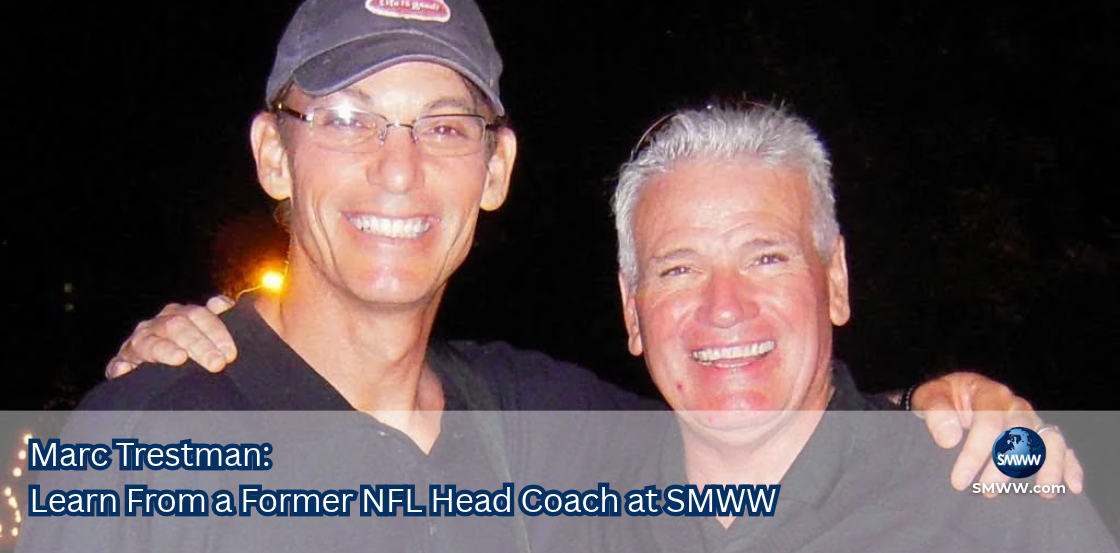
Marc Trestman: Learn From a Former NFL Head Coach at SMWW

Marc Trestman: Learn From a Former NFL Head Coach at SMWW
November 03, 2026 by Dr. Lynn Lashbrook

SHARE


What do NFL MVP Rich Gannon, Hall of Fame quarterback Steve Young, three Grey Cup championships, and the Chicago Bears have in common? Marc Trestman.

From developing elite quarterbacks to leading championship teams, Marc Trestman has spent five decades building one of football's most extensive coaching résumés.

A former NFL, CFL, and XFL head coach, offensive strategist, author, and leadership educator, Trestman has worked at nearly every level of professional football.

Now, he's sharing that experience with the next generation of football professionals through Sports Management Worldwide's Football Player Development & Strategy course.

Who Is Marc Trestman? Five Decades of Football Experience

Marc Trestman is a former Chicago Bears head coach, three-time Grey Cup champion, and two-time CFL Coach of the Year who spent 25 years coaching in the NFL.

His NFL career includes coaching positions with organizations such as the Chicago Bears, Oakland Raiders, San Francisco 49ers, Baltimore Ravens, Cleveland Browns, Minnesota Vikings, Arizona Cardinals, and Miami Dolphins.

Throughout his career, Trestman has served as a head coach, offensive coordinator, quarterbacks coach, and offensive assistant.

His accomplishments include:

  • Chicago Bears Head Coach: Led one of the most productive offenses in franchise history during the 2013 season.

  • Three-Time Grey Cup Champion: Won back-to-back championships with the Montreal Alouettes in 2009 and 2010, followed by another with the Toronto Argonauts in 2017.

  • Two-Time CFL Coach of the Year: Recognized for his leadership and coaching success in 2009 and 2017.

  • Oakland Raiders Offensive Coordinator: Helped guide the Raiders to Super Bowl XXXVII.

  • NFL MVP Quarterback Development: Worked with Rich Gannon during his 2002 NFL MVP season.

  • NFL, CFL, XFL, and College Football Experience: Developed a broad understanding of football organizations across multiple leagues and competitive levels.

Few football educators can offer this combination of NFL experience, championship leadership, and firsthand knowledge of how professional football organizations operate.

The Quarterback Developer Behind Some of Football's Biggest Names

Marc Trestman has worked with quarterbacks including Steve Young, Rich Gannon, Jake Plummer, Bernie Kosar, Scott Mitchell, Anthony Calvillo, and Ricky Ray.

His reputation as a quarterback developer comes from decades of studying the position, building offensive systems, and teaching players how to succeed.

One of his most notable achievements came with the Oakland Raiders in 2002.

As offensive coordinator, Trestman helped direct an offense led by quarterback Rich Gannon, who earned NFL MVP honors that season. The Raiders went on to reach Super Bowl XXXVII.

In the CFL, Trestman continued his success with quarterback Anthony Calvillo and the Montreal Alouettes, winning consecutive Grey Cup championships in 2009 and 2010.

He later returned to the CFL and led the Toronto Argonauts to another championship in 2017.

Three Grey Cup championships with two different organizations demonstrate something beyond offensive creativity: the ability to build, lead, and sustain winning football teams.

More Than an Offensive Coach: Leadership, Culture, and Player Development

Marc Trestman's coaching philosophy extends far beyond playbooks, formations, and quarterback mechanics.

His experience has shaped an approach that emphasizes the entire football organization, including how coaches, players, scouts, and front-office personnel work together.

His areas of expertise include:

  • Building leadership and organizational culture

  • Developing quarterbacks and other position groups

  • Designing effective practice structures and tempo

  • Teaching, communication, and staff development

  • Managing players, coaches, and personalities

  • Preparing offense, defense, and special teams

  • Building standards, accountability, and team chemistry

  • Understanding the relationship between head coaches and general managers

  • Game preparation and the offensive "First 15" concept

For aspiring coaches, these lessons provide insight into the daily responsibilities of leading a football team.

For scouts, general managers, player personnel executives, and football operations professionals, they offer something equally valuable: an understanding of how a head coach evaluates, develops, and leads an organization.

From NFL Sidelines to the Classroom: Marc Trestman as an Educator and Author

Marc Trestman brings the same commitment to teaching and leadership development to the classroom that has defined his coaching career.

He earned his Juris Doctor from the University of Miami School of Law and has served as an adjunct professor at the university's law school, teaching leadership principles drawn from professional sports and organizational management.

Trestman is also an accomplished author.

His book, Perseverance: Life Lessons on Leadership and Teamwork, explores lessons learned throughout his coaching career, including resilience, preparation, communication, and leading others.

His newer book, Teaching the Game, provides a framework for coaches and football professionals seeking to better understand the science of football, teaching methods, and organizational preparation.

The book examines how football professionals can approach their responsibilities throughout the year, from offseason planning and training camp to weekly game preparation.

Together, his books and teaching experience reflect an important part of Trestman's career that extends beyond wins and championships.

He isn't just a football coach. He's a teacher of the game and the people who make it successful.

Learn Directly From Marc Trestman Through SMWW

Sports Management Worldwide gives aspiring football professionals the opportunity to learn directly from Marc Trestman through its eight-week online Football Player Development & Strategy course.

Students explore how an experienced NFL head coach thinks about developing players, managing coaches, preparing for games, and building a successful football organization.

Through interactive learning sessions with Marc, students can gain insight into:

  • Quarterback development and offensive strategy

  • Building a winning culture and coaching philosophy

  • Player evaluation and development

  • Practice organization and game preparation

  • Leadership, communication, and accountability

  • The relationship between coaching staffs and football personnel departments

The course is valuable not only for aspiring coaches, but also for scouts, player personnel professionals, analysts, general managers, and others interested in football operations.

Marc Trestman has spent decades coaching elite quarterbacks, developing football players, and leading championship organizations. Now, SMWW students have the opportunity to learn directly from him.

Learn From Marc Trestman

For anyone serious about building a career in football, learning from someone with Marc Trestman's experience offers a perspective that goes far beyond textbooks and game film.

Former NFL Head Coach. Three-Time Grey Cup Champion. Two-Time CFL Coach of the Year. Quarterback Developer. Author. Leadership Educator.

The book gives you Marc Trestman's framework. The course gives you Marc Trestman.

Explore SMWW's Football Player Development & Strategy Course With Marc Trestman

Frequently Asked Questions

Who is Marc Trestman?

Marc Trestman is a former Chicago Bears head coach, three-time Grey Cup champion, two-time CFL Coach of the Year, and football leadership educator. His coaching career includes 25 years in the NFL and experience across the CFL, XFL, and college football.

Which quarterbacks has Marc Trestman coached?

Marc Trestman has worked with quarterbacks including Steve Young, Rich Gannon, Jake Plummer, Bernie Kosar, Scott Mitchell, Anthony Calvillo, and Ricky Ray. He helped Rich Gannon during his 2002 NFL MVP season.

How many Grey Cup championships has Marc Trestman won?

Marc Trestman won three Grey Cup championships as a head coach, including two with the Montreal Alouettes and one with the Toronto Argonauts.

What books has Marc Trestman written?

Marc Trestman's books include Perseverance: Life Lessons on Leadership and Teamwork and Teaching the Game. Both explore principles relevant to football coaching, leadership, and organizational development.

Does Marc Trestman teach a football coaching course?

Yes. Marc Trestman teaches Sports Management Worldwide's Football Player Development & Strategy course. The eight-week online program covers football leadership, quarterback development, coaching strategy, player development, and organizational culture.


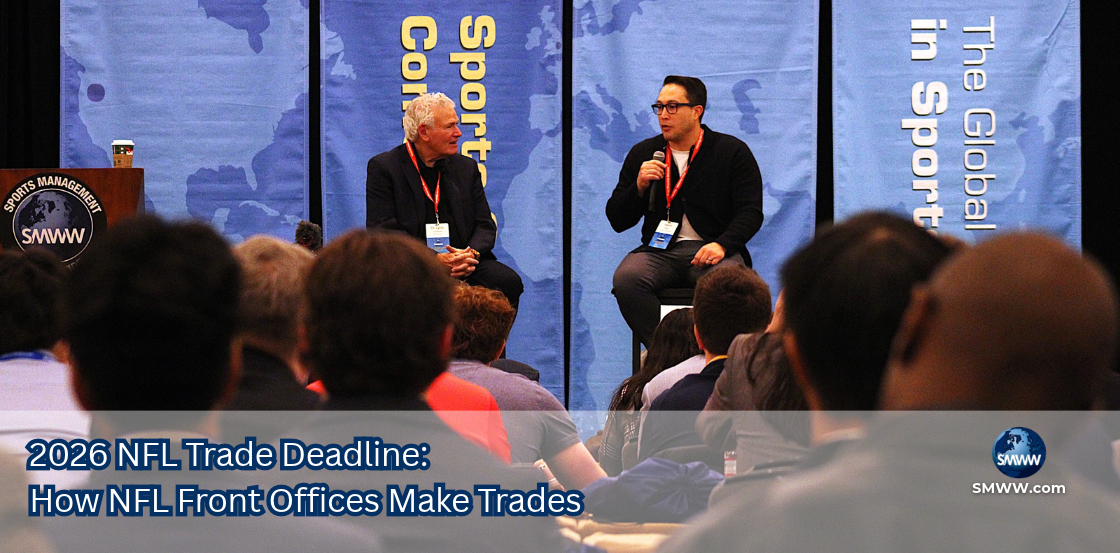
2026 NFL Trade Deadline: How NFL Front Offices Make Trades

2026 NFL Trade Deadline: How NFL Front Offices Make Trades
November 02, 2026 by Dr. Lynn Lashbrook

SHARE


The 2026 NFL trade deadline is Tuesday, November 10, at 4 PM ET, and every potential deal involves much more than two general managers agreeing to exchange players. NFL front offices must evaluate talent, assess salary cap implications, consider draft picks, and determine whether a trade helps the organization's future.

For fans, the NFL trade deadline is about blockbuster deals and breaking news.

For aspiring sports professionals, it's a look inside one of the most exciting parts of the football business.

Ever wondered what it would be like to help an NFL team make its next big trade?

Here's what happens behind the scenes and how you can start preparing for a career in an NFL front office.

When Is the 2026 NFL Trade Deadline?

The 2026 NFL trade deadline is Tuesday, November 10, at 4 PM Eastern Time.

Teams approaching the deadline face important decisions.

Should they trade future draft picks to strengthen their current roster? Should they move a veteran player and focus on building for the future? Can they afford to acquire another player's contract?

These decisions can influence the direction of a franchise for years.

The trade market is already active. On October 29, the Chicago Bears acquired defensive tackle Jeffery Simmons from the Tennessee Titans in a deal involving multiple draft picks.

For the people working inside NFL organizations, trades like these represent months of evaluation, planning, and decision-making.

Who Actually Makes Trades Inside an NFL Front Office?

NFL general managers lead trade decisions, but scouts, player personnel executives, salary cap specialists, analysts, and coaches can all contribute to the process.

A trade might be announced in seconds, but the work behind it involves several departments.

General Manager

The general manager oversees roster construction and evaluates whether a proposed trade aligns with the team's competitive and long-term goals.

Scouting and Player Personnel

Scouts and personnel executives evaluate players, study game film, compare talent, and help determine a player's potential value.

Aspiring scouts and personnel professionals can explore these responsibilities through SMWW's Football GM & Scouting course.

Salary Cap and Football Operations

Salary cap specialists analyze contract obligations, available cap space, and the financial consequences of acquiring or trading a player.

Analytics Departments

Football analysts provide statistical insights, performance projections, and information that can support personnel decisions.

Coaching Staff

Coaches help evaluate how a player might fit the team's system and whether an acquisition addresses a specific need.

One NFL trade can involve an entire team of professionals working behind the scenes.

How Does the NFL Salary Cap Affect Trades?

The NFL salary cap influences trades because teams must account for player contracts, cap charges, and the financial impact of each transaction.

A team might identify the perfect player, but that doesn't automatically mean it can make the trade.

Front offices must evaluate the financial details, including the player's existing contract and how the transaction affects the team's salary cap.

They also need to consider future seasons.

A trade that improves a roster today could limit flexibility later.

That's why professionals who understand contracts, collective bargaining agreements, and salary cap management are valuable throughout the NFL.

SMWW's Salary Cap & Contract Negotiation education, featuring industry expert Joel Corry, helps aspiring professionals explore the financial side of roster construction and player contracts.

Sometimes the most important person involved in a potential trade isn't the scout evaluating the player. It's the person figuring out whether the numbers work.

What Jobs Are Available in NFL Football Operations?

NFL football operations careers include scouting, player personnel, salary cap analysis, football analytics, and roster management.

Not everyone working in an NFL front office is a general manager.

Organizations employ professionals with different responsibilities and backgrounds.

Some positions to explore include:

  • Football Scout: Evaluates college and professional players through film study and live scouting.

  • Player Personnel Assistant: Supports scouting departments, player evaluations, and roster-related work.

  • Football Operations Assistant: Helps coordinate administrative and operational responsibilities.

  • Salary Cap Analyst: Assists with contract analysis, financial planning, and salary cap compliance.

  • Football Analyst: Uses data and performance metrics to support football decisions.

  • Director of Player Personnel: Helps oversee scouting and player evaluation activities.

These positions require different skills, but all contribute to the larger process of building a competitive football team.

For someone who dreams of working in the NFL, understanding how these departments interact is an important starting point.

How Do You Get a Job in an NFL Front Office?

You can begin pursuing an NFL front-office career by learning scouting and football operations, developing practical evaluation skills, and building relationships within the industry.

Many aspiring football professionals focus exclusively on getting hired by an NFL team.

But preparing for that opportunity starts well before submitting an application.

Learn how to evaluate players. Practice writing scouting reports. Study roster construction and salary cap rules. Explore opportunities with college football programs, scouting organizations, and professional leagues.

Building a portfolio of scouting reports or football analysis can help demonstrate your knowledge.

It's also important to learn from professionals who have worked inside NFL organizations.

Understanding how real front offices operate can help you move beyond being a knowledgeable football fan and begin thinking like someone responsible for building a team.

Learn the Business of Football With SMWW

Sports Management Worldwide (SMWW) offers specialized football education for aspiring scouts, general managers, analysts, coaches, and football operations professionals.

Whether your goal is to evaluate NFL Draft prospects, analyze contracts, or understand how teams develop players, SMWW offers programs focused on different areas of professional football.

Football GM & Scouting

Learn how NFL organizations evaluate talent, develop scouting reports, manage player personnel, and make roster decisions.

The course has featured experienced industry professionals, including former Tampa Bay Buccaneers General Manager Mark Dominik.

Explore SMWW's Football GM & Scouting Course

Salary Cap & Contract Negotiation

Understanding player contracts and the salary cap is essential when evaluating potential NFL trades.

SMWW's salary cap education features Joel Corry, a former NFL agent and respected contract and salary cap analyst.

Explore SMWW's Salary Cap & Contract Negotiation Course

Football Analytics

Analytics departments help organizations evaluate player performance, identify trends, and support personnel decisions.

SMWW's Football Analytics training introduces students to statistical concepts and how data can be applied to professional football.

Explore SMWW's Football Analytics Course

Football Player Development

Front-office decisions don't end when a player joins the roster.

Understanding how coaches and organizations develop talent is another important part of evaluating personnel decisions.

SMWW's Football Player Development course explores coaching, organizational culture, and the process of developing players.

Explore SMWW's Football Player Development Course

These programs provide aspiring football professionals with opportunities to develop specialized knowledge while learning from experienced industry mentors.

The goal isn't simply to watch the biggest NFL trades happen. It's to understand the work that makes those decisions possible.

The Next NFL Trade Could Inspire Your Career

The NFL trade deadline is more than a week of rumors and breaking news. It's a demonstration of the people, skills, and decisions involved in building a professional football team.

Every transaction has a story behind it.

Scouts evaluate the talent. Analysts study performance. Salary cap specialists examine the numbers. General managers consider the future.

And somewhere, an aspiring sports professional is watching and wondering how to become part of that process.

Don't just follow the next NFL trade. Learn what it takes to be part of the front office making it happen.

Start exploring a career in football through SMWW's Football GM & Scouting course.

Frequently Asked Questions

When is the 2026 NFL trade deadline?

The 2026 NFL trade deadline is Tuesday, November 10, at 4 PM ET. NFL teams must complete their trades before the league's deadline.

Who decides which players an NFL team trades?

An NFL team's general manager typically leads personnel and trade decisions, working with team leadership and input from scouts, coaches, analysts, and football operations personnel. The exact decision-making structure varies by organization.

How do NFL teams evaluate potential trades?

NFL teams evaluate potential trades by considering player performance, roster needs, contract obligations, salary cap implications, draft picks, and long-term team strategy.

How can you get a job in an NFL front office?

You can pursue an NFL front-office career by developing skills in scouting, player evaluation, football analytics, and operations while gaining relevant experience and building professional relationships.

What does an NFL salary cap analyst do?

An NFL salary cap analyst helps evaluate player contracts, cap charges, roster costs, and financial implications of personnel decisions. The role supports a team's ability to manage its roster within league rules.

Can SMWW help you prepare for an NFL scouting career?

Sports Management Worldwide offers a Football GM & Scouting course designed to help students understand player evaluation, scouting, and football operations. Students can develop industry knowledge and learn from experienced football professionals.


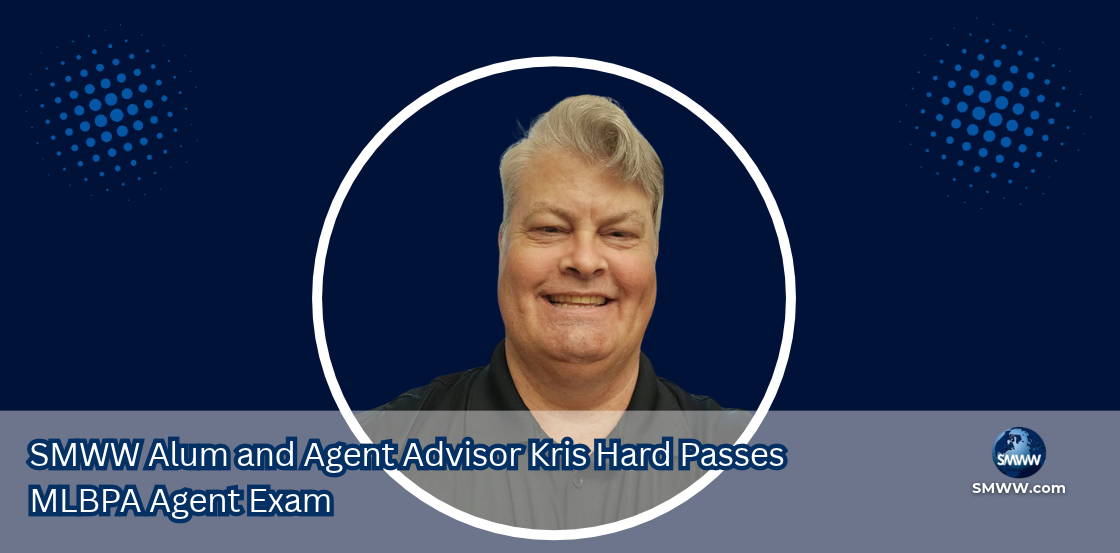
SMWW Alum and Agent Advisor Kris Hard Passes MLBPA Agent Exam

SMWW Alum and Agent Advisor Kris Hard Passes MLBPA Agent Exam
October 30, 2026 by Dr. Lynn Lashbrook

SHARE


Sports Management Worldwide (SMWW) alumnus and Agent Advisor Kris Hard has passed the Major League Baseball Players Association (MLBPA) agent exam, marking an exciting milestone in his journey toward a career in professional baseball representation.

Kris's accomplishment reflects his dedication to the sports industry, his commitment to continuing his education, and his passion for the business of baseball.

Congratulations, Kris!

Kris Hard Passes the MLBPA Agent Exam

Passing the MLBPA agent exam is a significant achievement for Kris Hard as he continues pursuing opportunities in professional baseball representation.

The exam is an important component of the MLBPA's agent certification process and requires preparation and an understanding of the business and regulations surrounding professional baseball.

For Kris, this accomplishment represents another step forward in a journey built on education, hard work, and professional development.

Five SMWW Courses and an Advanced Baseball Certificate

Kris Hard has demonstrated an exceptional commitment to learning the business of baseball, completing five SMWW courses and earning the Baseball Front Office Advanced Certificate.

His educational background includes:

In addition to these courses, Kris earned the SMWW Baseball Front Office Advanced Certificate, further expanding his knowledge of professional baseball operations.

From scouting and analytics to player development and athlete representation, Kris has invested time in understanding multiple aspects of the industry.

His dedication is a great example of someone taking meaningful steps toward building a career in sports.

Continuing His Journey With SMWW Agency

Kris is also an SMWW Agent Advisor, connecting his passion for athlete representation with the professional opportunities available through SMWW Agency.

His recent success on the MLBPA exam is an exciting development as he continues pursuing his goals in the baseball industry.

Through his education with Sports Management Worldwide and his involvement with SMWW Agency, Kris has demonstrated a commitment to learning, growing, and building his future in athlete representation.

Congratulations, Kris Hard!

Sports Management Worldwide is proud to recognize Kris Hard for passing the MLBPA agent exam.

Completing five courses, earning an advanced baseball certificate, and continuing his involvement in athlete representation are accomplishments worth celebrating.

Kris's journey is a reminder that pursuing a career in sports takes dedication, preparation, and a willingness to keep learning.

Congratulations, Kris! We look forward to seeing what's next in your baseball career.

Interested in pursuing your own career in baseball? Explore the educational opportunities available through Sports Management Worldwide.

Frequently Asked Questions

Who is Kris Hard?

Kris Hard is a Sports Management Worldwide alumnus and SMWW Agent Advisor who recently passed the MLBPA agent exam. He has completed five SMWW courses and earned the Baseball Front Office Advanced Certificate.

What SMWW courses did Kris Hard complete?

Kris completed Baseball GM & Scouting, Baseball Player Development, Baseball Agent, Baseball Analytics, and Athlete Management. His education covers several areas of professional baseball and athlete representation.

What is Kris Hard's connection to SMWW Agency?

Kris Hard is an SMWW Agent Advisor. His involvement with SMWW Agency is part of his continued professional development and pursuit of opportunities in athlete representation.


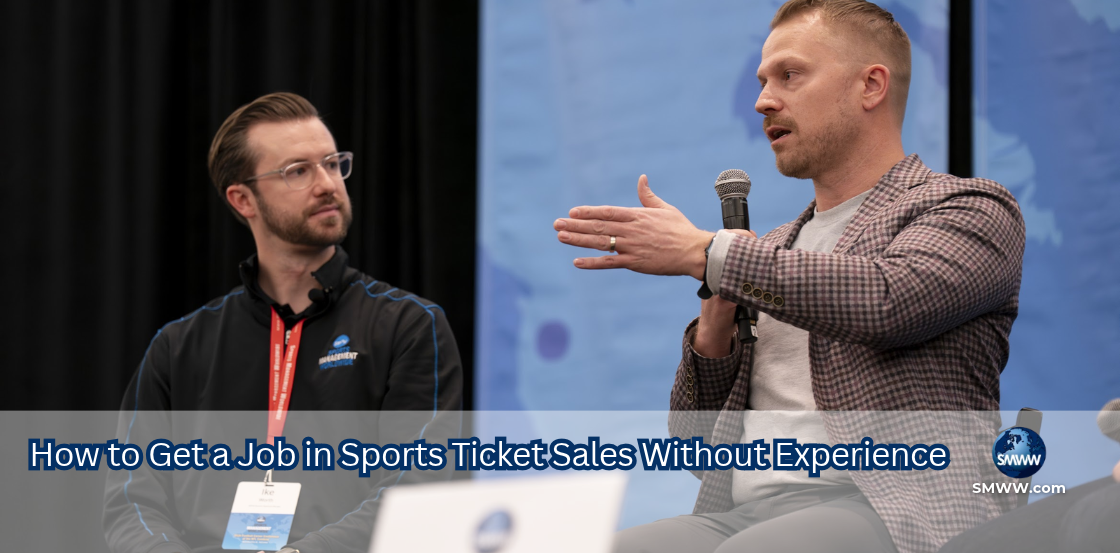
How to Get a Job in Sports Ticket Sales Without Experience

How to Get a Job in Sports Ticket Sales Without Experience
October 29, 2026 by Dr. Lynn Lashbrook

SHARE


You can get a job in sports ticket sales without previous sports industry experience by developing sales skills, learning how professional teams generate revenue, and applying for entry-level front-office positions. Ticket sales is one of the most accessible career paths for people who want to work in professional sports, and the skills you develop can lead to opportunities in sponsorships, marketing, business development, and team leadership.

Everyone wants to work for their favorite sports team. But while thousands dream about becoming a general manager, scout, or coach, many overlook the people helping keep the business running.

Want to get your foot in the door with an NFL, NBA, NHL, or MLB organization? Ticket sales might be your opportunity.

Can You Get a Job in Sports Ticket Sales Without Experience?

Yes, many entry-level sports ticket sales positions are designed for candidates who are new to the sports industry.

Professional teams need employees who can connect with fans, build relationships, sell ticket packages, and provide excellent customer service.

While previous sales experience can help, teams also look for candidates who are motivated, coachable, professional, and comfortable communicating with people.

A background in retail, hospitality, customer service, fundraising, or another people-focused industry can provide transferable skills.

The key is demonstrating that you understand the business of sports and are willing to learn.

You don't need to have played professional sports to work for a professional sports team. You need to show how you can contribute to its success.

Why Is Ticket Sales a Popular Entry Point Into Professional Sports?

Ticket sales provides an opportunity to gain front-office experience while developing business skills that are valuable across professional sports organizations.

Every professional sports franchise needs revenue to operate.

Ticket sales departments help teams build relationships with fans, businesses, and community organizations while generating revenue through season tickets, group experiences, premium seating, and other ticket products.

These departments can also serve as a starting point for professionals interested in other areas of sports business.

Someone who begins in ticket sales may eventually pursue opportunities in:

  • Corporate partnerships and sponsorship sales

  • Premium seating and hospitality

  • Marketing and fan engagement

  • Business development

  • Client services and account management

  • Revenue operations

  • Front-office management

Moving into another department is not automatic, but strong performance and relevant experience can help open doors.

Your first job in sports doesn't have to be your dream job. It can be the job that helps you reach it.

What Does a Sports Ticket Sales Representative Actually Do?

A sports ticket sales representative helps teams attract fans, sell ticket packages, and maintain relationships with customers.

The position involves much more than processing ticket orders.

Depending on the organization, responsibilities may include:

  • Contacting prospective season-ticket holders and business clients

  • Selling individual, group, season, and premium ticket packages

  • Building relationships with local companies and community organizations

  • Conducting stadium or arena tours

  • Meeting with prospective buyers

  • Managing customer relationships through sales software

  • Following up with existing and prospective clients

  • Working toward individual and department sales goals

Sales representatives often work closely with other front-office departments, giving them exposure to how a sports organization operates.

That experience can be valuable for anyone interested in building a long-term sports business career.

What Skills Do Sports Teams Look for in Ticket Sales Candidates?

Sports teams look for candidates with communication, relationship-building, problem-solving, and sales skills, along with a willingness to learn and improve.

You don't need to arrive knowing everything about ticket sales.

However, developing these five skills can help you stand out.

1. Communication

Can you explain the value of a ticket package clearly and confidently?

Sports sales professionals need to communicate with fans, business owners, and colleagues every day.

2. Relationship Building

Successful ticket sales is about understanding customers and creating experiences that fit their needs.

Teams value people who can build trust and maintain professional relationships.

3. Persistence

Not every conversation leads to a sale.

The ability to handle rejection, follow up professionally, and stay motivated is important.

4. Organization

Sales representatives may manage numerous customer accounts, appointments, and follow-up conversations.

Strong organizational habits help them stay on top of their responsibilities.

5. Coachability

Teams invest time in training new sales employees.

Being receptive to feedback and willing to improve can make a significant difference.

The good news? These are skills you can develop before getting your first sports job.

How Do You Get Your First Job in Sports Ticket Sales?

The best way to pursue an entry-level sports ticket sales job is to learn the fundamentals of sports sales, develop practical experience, and apply directly to team sales departments.

Start with these five steps.

Step 1: Learn How Sports Teams Generate Revenue

Understand the differences between season tickets, group sales, premium seating, and corporate partnerships.

Knowing how these products support a team's business can help you during interviews.

Step 2: Practice Selling

Choose a professional team and create a sample sales pitch for a season-ticket or group-ticket package.

Explain who the ideal customer is, what makes the experience valuable, and how you would respond to common questions.

This gives you something concrete to discuss with hiring managers.

Step 3: Build a Sports-Focused Resume

Highlight experience in customer service, communication, sales, fundraising, and leadership.

Even if you haven't worked in sports, demonstrate how your existing skills apply to a sales position.

Step 4: Network With Sports Business Professionals

Connect with ticket sales representatives, account executives, and sales managers on LinkedIn.

Ask thoughtful questions about their careers and what they look for in entry-level candidates.

Step 5: Apply Beyond Your Favorite Team

Don't limit your search to the NFL or NBA.

Minor league baseball, professional soccer, hockey, women's sports, and college athletic departments also offer sports business opportunities.

The more organizations you consider, the more opportunities you may find to begin building your career.

Where Can You Find Entry-Level Sports Ticket Sales Jobs?

Entry-level sports ticket sales jobs are commonly advertised on team career pages, sports industry job boards, and university athletics employment websites.

One useful resource is TeamWork Online, which lists positions across professional sports, college athletics, venues, and sports business organizations.

Common job titles to search include:

  • Inside Sales Representative

  • Ticket Sales Account Executive

  • Group Sales Representative

  • Membership Sales Representative

  • Premium Sales Representative

  • Sales Development Representative

  • Ticket Sales and Service Associate

Job titles and qualifications vary by organization.

When reviewing openings, pay attention to the responsibilities, compensation structure, training opportunities, and whether the position offers room for advancement.

How Can SMWW Help You Break Into Sports Sales?

Sports Management Worldwide's Sports Sales & Marketing course helps aspiring sports professionals learn the business of ticket sales, sponsorships, marketing, and customer relationships from experienced industry executives.

The eight-week online course features professionals including Jim Van Dam, Vice President of Ticket Sales & Service for the Indianapolis Colts, and Alexa Klein, Executive Director of Partnership Activation for the New York Yankees.

Students gain insight into the business side of professional sports, including:

  • Ticket sales strategies and techniques

  • Building relationships with customers

  • Sponsorships and sports marketing

  • Revenue generation and sales operations

  • Professional communication and sales preparation

  • Career development and opportunities in sports business

Learning from people who work inside professional sports organizations can help students better understand what teams expect from their employees.

The online format also makes it possible to pursue training while attending school or maintaining another job.

Explore SMWW's Sports Sales & Marketing Course

Your First Job in Sports Could Be Closer Than You Think

Breaking into professional sports often starts with identifying a department where you can contribute, building the right skills, and taking action.

You don't need to wait for an opening in scouting, coaching, or player personnel to begin pursuing a career with a sports team.

Ticket sales offers a chance to learn how the business operates, work with fans, and develop skills that can support long-term career growth.

For aspiring sports professionals, the question shouldn't just be, How do I work for my favorite team?

It should be, What skills can I develop that a professional sports team needs?

Sports Management Worldwide helps students explore that question through industry-focused education and mentorship.

Your career in sports might start with a phone call, a customer relationship, or your first ticket sale.

Start Building Your Sports Career With SMWW

Frequently Asked Questions

Can you get a sports ticket sales job without a degree?

Yes, some sports ticket sales positions are open to candidates without a college degree. Requirements vary by employer, and many teams consider relevant sales experience, communication skills, and professional qualifications.

Is ticket sales a good way to break into the sports industry?

Ticket sales can be a valuable entry point into the sports industry because it provides direct experience with a team's business operations. The communication, sales, and relationship-building skills developed in these roles can also be useful in other sports business departments.

How much do entry-level sports ticket sales representatives make?

Entry-level sports ticket sales compensation varies by team, location, and position. Some jobs offer a base salary plus commission or performance incentives, while others use different compensation structures. Review each job posting for details.

Can sports ticket sales lead to other front-office jobs?

Yes, sports ticket sales experience can help professionals develop skills relevant to sponsorships, marketing, premium sales, client services, and business development. Career advancement depends on performance, qualifications, available opportunities, and individual career goals.

How do you prepare for a sports ticket sales interview?

Prepare for a sports ticket sales interview by researching the team's ticket products, practicing a sales conversation, and preparing examples of your communication and customer service skills. Some employers may ask candidates to complete a mock sales call.

Who teaches SMWW's Sports Sales & Marketing course?

SMWW's Sports Sales & Marketing course features Jim Van Dam of the Indianapolis Colts and Alexa Klein of the New York Yankees. Their professional experience gives students insight into ticket sales, partnerships, and the business of professional sports.


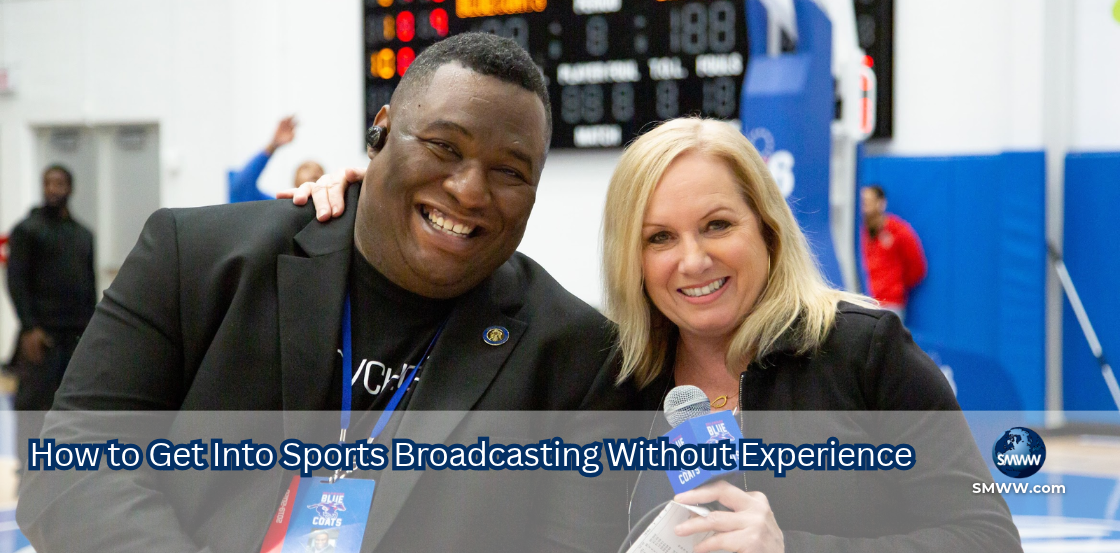
How to Get Into Sports Broadcasting Without Experience

How to Get Into Sports Broadcasting Without Experience
October 28, 2026 by Dr. Lynn Lashbrook

SHARE


You can break into sports broadcasting without previous professional experience by building a demo reel, gaining hands-on practice, and developing relationships with people working in sports media. You don't need to start at ESPN or call an NFL game to begin your career. Local sports, digital platforms, college athletics, and online broadcasting have created multiple ways to gain experience.

With football, basketball, and hockey seasons underway, sports fans are consuming live coverage, highlights, interviews, podcasts, and commentary across more platforms than ever.

Someone has to create all that content. Why couldn't it be you?

Can You Get Into Sports Broadcasting Without Experience?

Yes, you can start a sports broadcasting career without previous professional experience, but you need to demonstrate your communication skills, sports knowledge, and ability to create engaging content.

For many aspiring broadcasters, the biggest challenge is getting that first opportunity.

The solution? Start creating your own opportunities.

You can practice calling games, interview local athletes, host a sports podcast, or produce short video segments covering teams you follow.

These projects may not be professional broadcasting jobs, but they can help you develop the skills and portfolio that employers want to see.

In sports broadcasting, showing what you can do is often more powerful than simply telling someone you're passionate about sports.

What Jobs Are Available in Sports Broadcasting?

Sports broadcasting careers include on-air positions, production roles, digital content creation, and behind-the-scenes opportunities.

When most people think of sports broadcasting, they picture a play-by-play announcer or television analyst.

But every broadcast requires an entire team of professionals.

Career opportunities include:

  • Play-by-play announcer: Describes live sporting events for television, radio, or streaming audiences.

  • Color commentator: Provides analysis, strategy, and insight during games.

  • Sideline reporter: Conducts interviews and delivers updates from the field or court.

  • Sports podcast host: Creates discussions, interviews, and original sports programming.

  • Broadcast producer: Helps organize and execute live or recorded productions.

  • Production assistant: Supports broadcasts through research, editing, graphics, and production tasks.

  • Video editor: Produces highlights, features, interviews, and social media content.

  • Digital sports content creator: Develops video, audio, and social programming for teams, leagues, and media outlets.

Not every sports broadcasting career requires being on camera.

For people interested in technology, storytelling, editing, or production, there are opportunities behind the scenes as well.

How Do You Build a Sports Broadcasting Demo Reel?

You can build a sports broadcasting demo reel by recording short examples of your play-by-play commentary, interviews, reporting, or sports analysis and combining your strongest work into a portfolio.

A demo reel allows employers to evaluate how you communicate and present information.

You don't need an expensive studio to get started.

A microphone, recording software, and a quiet space can be enough to begin practicing.

Here are five ways to create your first broadcasting portfolio.

1. Practice Play-by-Play Commentary

Choose a sport you understand and practice describing the action clearly and naturally.

Focus on preparation, timing, accuracy, and knowing when to let the game speak for itself.

Use footage or events you have permission to record or broadcast. Avoid reposting copyrighted game broadcasts without authorization.

2. Record a Sports Analysis Segment

Create a two-minute breakdown of a team's performance, an upcoming matchup, or a player development trend.

This demonstrates your ability to explain sports to an audience.

3. Interview a Coach or Athlete

Reach out to a local coach, athlete, or athletic administrator and request a short interview.

Prepare thoughtful questions and practice listening, following up, and keeping the conversation moving.

4. Start a Sports Podcast or Video Series

Consistent content creation helps you improve your delivery and develop your own style.

You can focus on one sport, one team, or a particular area of sports business.

5. Edit Your Best Work Into a Demo Reel

Select a few strong clips that demonstrate different skills.

A concise, polished reel is generally more useful than a long collection of unedited recordings.

The goal isn't to look like a national broadcaster on day one. It's to show improvement, preparation, and potential.

Where Can You Get Your First Sports Broadcasting Opportunity?

Local sports organizations, college athletic departments, community media outlets, and smaller professional teams can provide opportunities to gain early broadcasting experience.

Aspiring broadcasters often overlook opportunities close to home.

High school athletics, community colleges, amateur leagues, and smaller sports organizations may need help producing games, creating highlights, or conducting interviews.

Look for opportunities involving:

  • High school and college sports broadcasts

  • Minor league and independent sports organizations

  • University athletic communications departments

  • Local radio stations and digital media outlets

  • Sports streaming services

  • Team social media and video production departments

You can also explore sports media internships and production assistant positions.

For example, ESPN's early-career production pathway has included responsibilities such as editing highlights, preparing graphics, researching content, and supporting live events.

Your first opportunity might be behind a camera or inside a production room rather than behind a microphone.

That experience can still help you understand the broadcasting industry and build valuable professional relationships.

What Skills Do Sports Broadcasting Employers Look For?

Sports broadcasting employers look for strong communication, preparation, storytelling, technical ability, and the capacity to perform under pressure.

Knowing sports is important, but knowing how to communicate sports is what separates an enthusiastic fan from an effective broadcaster.

Some of the most valuable skills include:

Communication and storytelling: Explain what is happening and why it matters without overwhelming your audience.

Research and preparation: Know the teams, athletes, statistics, and storylines before the broadcast begins.

Interviewing: Ask meaningful questions, listen carefully, and respond naturally.

Audio and video production: Develop familiarity with microphones, recording equipment, editing software, and streaming platforms.

Adaptability: Live sports are unpredictable. Broadcasters must react quickly while maintaining accuracy and professionalism.

Professional relationships: Build connections with producers, reporters, athletic departments, and other people working in sports media.

These are skills you can begin practicing long before you receive your first professional job offer.

How Can SMWW Help You Start a Sports Broadcasting Career?

Sports Management Worldwide offers a Sports Broadcasting course designed to help aspiring broadcasters develop practical communication, interviewing, and on-air skills while learning from an experienced sports media professional.

The course features Dei Lynam, a veteran sports reporter whose career has included NBA coverage, sideline reporting, sports anchoring, and production work.

Lynam spent many years covering the Philadelphia 76ers and brings extensive professional broadcasting experience to SMWW students.

Through SMWW's Sports Broadcasting training, students can explore areas such as:

  • Sports play-by-play and commentary

  • Conducting coach and athlete interviews

  • Pregame and postgame reporting

  • Developing an on-air personality

  • Preparing sports programming

  • Understanding the professional broadcasting environment

The online format gives aspiring broadcasters an opportunity to develop their knowledge while continuing their education or current careers.

For students interested in working in sports media, learning directly from someone who has spent years covering professional sports can provide valuable industry perspective.

Explore SMWW's Sports Broadcasting Course

Your Sports Broadcasting Career Can Start With One Game

The first step toward a sports broadcasting career is to begin practicing, creating content, and pursuing opportunities to gain experience.

You don't have to wait for a television network to give you permission to start.

Call a local game. Record an interview. Produce a podcast. Build a demo reel.

Then keep improving.

The sports industry needs talented communicators who can inform, entertain, and connect with audiences.

Whether your goal is to become an NBA sideline reporter, an NFL commentator, a college sports broadcaster, or a digital sports producer, the journey begins with developing the skills to do the job.

Your future in sports broadcasting could start with the next game you watch.

Take the first step toward turning your passion for sports into a career.

Learn About Sports Broadcasting With SMWW

Frequently Asked Questions

Can you become a sports broadcaster without a journalism degree?

Yes, you can become a sports broadcaster without a journalism degree. Employers may consider communication skills, relevant experience, demo reels, and technical abilities alongside formal education. Requirements vary by position.

How do you get your first job in sports broadcasting?

You can pursue your first sports broadcasting job by building a demo reel, gaining experience through local or college sports, and applying for internships or entry-level media positions. Production assistant and digital content roles can also provide entry points.

What should be included in a sports broadcasting demo reel?

A sports broadcasting demo reel should feature your strongest examples of commentary, reporting, interviewing, or analysis. Choose clips that demonstrate clear communication, preparation, personality, and professional presentation.

Can you start a sports broadcasting career while working full-time?

Yes, you can begin developing sports broadcasting skills while maintaining a full-time job. Recording podcasts, practicing commentary, taking online courses, and pursuing occasional local broadcasting opportunities can help you build experience.

Who teaches SMWW's Sports Broadcasting course?

Dei Lynam, a veteran sports reporter with extensive NBA broadcasting experience, is featured as a mentor in Sports Management Worldwide's Sports Broadcasting course. Her background includes sideline reporting, anchoring, and sports media production.


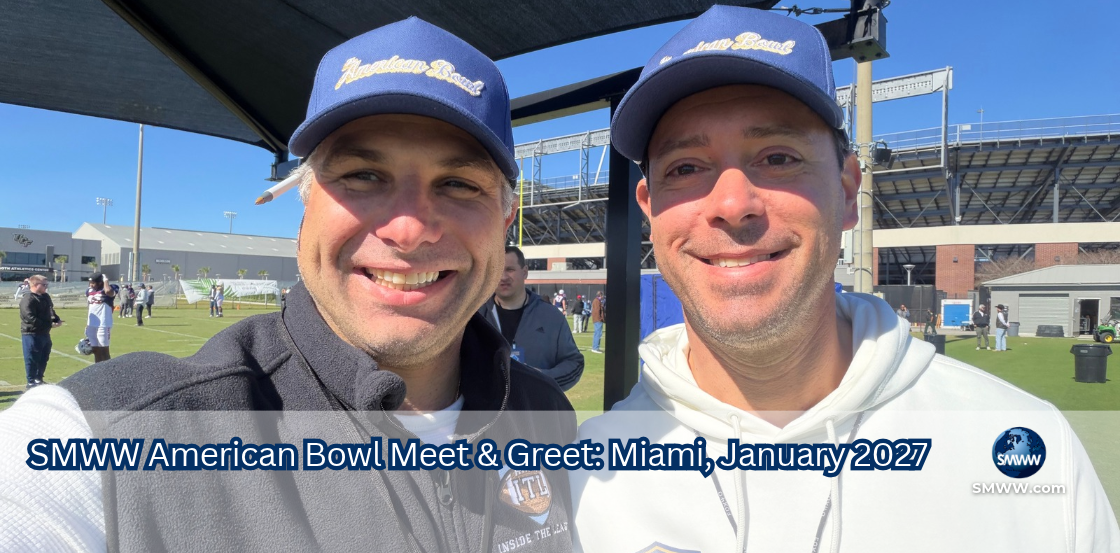
SMWW American Bowl Meet & Greet: Miami, January 2027

SMWW American Bowl Meet & Greet: Miami, January 2027
October 27, 2026 by Dr. Lynn Lashbrook

SHARE


Sports Management Worldwide is bringing football professionals and aspiring industry talent together in Miami for the SMWW American Bowl Meet & Greet on Tuesday, January 19, 2027, at 8 p.m. Held during American Bowl Week, the event offers an evening of networking with scouts, agents, coaches, NFL Draft specialists, and others working across the business of football.

The announced lineup includes Dr. Lynn Lashbrook, Marc Trestman, Brian Baldinger, Ric Serritella and the NFL Draft Bible Scouting Department, and Nick Prater. For attendees interested in scouting, athlete representation, player personnel, media, or football operations, the evening offers a place to make introductions and exchange ideas with people who share those interests.

Advance online registration is required. Admission is currently listed at $50, including a name badge and one complimentary drink ticket. The Miami venue will be announced.

Meet Football Professionals During American Bowl Week

The SMWW Meet & Greet brings several parts of the football industry into one networking setting during the week of the American Bowl.

Scouts, agents, coaches, analysts, and media professionals approach the game from different perspectives. Bringing those perspectives together creates opportunities to discuss how players are evaluated, how professional relationships develop, and how people find their place in football.

For someone exploring a career in scouting, a conversation might begin with evaluating a particular position. For an aspiring player representative, it could focus on understanding an athlete’s professional path. For an established professional, the value may come from reconnecting with colleagues and meeting people working in another part of the industry.

The event is designed to make those introductions possible. Attendees can ask thoughtful questions, share their interests, and begin conversations they can continue after Miami.

Who Should Attend the SMWW Meet & Greet?

The event welcomes current football professionals, students, career changers, and others interested in building their knowledge and network.

SMWW identifies several groups who may benefit from attending:

  • Aspiring NFL and CFL scouts and player personnel professionals.

  • Sports agents and prospective player representatives.

  • Coaches, analysts, and football operations professionals.

  • NFL Draft analysts and football media professionals.

  • Students and professionals pursuing careers in football.

Previous football industry experience is not required. Attendees at different career stages can participate, whether they are making their first industry introduction or expanding an existing professional network.

Come prepared to explain your interests clearly. A specific question about scouting, representation, or football operations can give a conversation more direction than a general request for career advice.

Why American Bowl Week Matters

American Bowl Week brings college prospects and the professional football evaluation community together ahead of the next stage of players’ careers.

The second annual American Bowl is scheduled for Friday, January 22, 2027, in Miami, three days after the SMWW Meet & Greet. The game follows the inaugural 2026 event, which was broadcast on NFL Network.

For those interested in athlete representation and scouting, the week provides context for understanding the work surrounding a prospect’s transition toward professional football. Evaluations, preparation, and communication all contribute to that process.

SMWW Agency readers can also explore why collegiate all-star games matter in the NFL Draft process for related context on this part of the football calendar.

Explore the Practice Side of Player Evaluation

American Bowl practices offer another way to study the evaluation process, with schedules, locations, and access details still to be announced.

Practices can give aspiring scouts and player personnel professionals opportunities to observe position drills, team periods, technique, athleticism, and decision-making. Watching those settings with a clear evaluation question can help connect football knowledge to the work of assessing prospects.

An aspiring scout might focus on how a player responds to coaching or performs against different opponents. Someone interested in representation might pay closer attention to the preparation and professional expectations surrounding the week.

American Bowl practice access and game tickets are separate from SMWW Meet & Greet registration. 

Plan Your Evening in Miami

The SMWW American Bowl Meet & Greet begins at 8 p.m. on Tuesday, January 19, with the final Miami venue to be announced.

The current registration details are:

  • Admission: $50.

  • Included: Meet & Greet admission, a name badge, and one complimentary drink ticket.

  • Registration: Advance online registration required; walk-up registrations will not be accepted.

  • Venue: To be announced, with location and arrival details provided to registered attendees before the event.

  • Travel: Flights and hotel accommodations are not included.

  • American Bowl access: Game tickets and practice access are not included.

The registration page flags a November 1 price increase. Check the current rate and latest event details before completing your registration.

Make Your Next Football Connection in Miami

The SMWW American Bowl Meet & Greet offers an evening to meet people, ask informed questions, and build relationships across football.

Whether your interests are in evaluating talent, representing athletes, coaching, media, or team operations, arrive with a clear purpose and an openness to learning about someone else’s work. A useful introduction starts with a conversation—and grows through thoughtful follow-up.

View event details and register for the SMWW American Bowl Meet & Greet.

Frequently Asked Questions

When is the SMWW American Bowl Meet & Greet?

The event is scheduled for Tuesday, January 19, 2027, at 8 p.m. in Miami, Florida.

Where will the event take place?

The Miami venue has not yet been announced. Registered attendees will receive location and arrival details before the event.

How much does registration cost?

Admission is currently listed at $50 and includes a name badge and one complimentary drink ticket. The page flags a November 1 price increase, so check the registration page for the latest rate.

Do I need football industry experience to attend?

No. The event welcomes students, career changers, aspiring football professionals, and people already working in the industry.

Who is listed to participate?

The announced lineup includes Dr. Lynn Lashbrook, Marc Trestman, Brian Baldinger, Ric Serritella and the NFL Draft Bible Scouting Department, and Nick Prater, alongside participating coaches, scouts, agents, and football professionals.

Does registration include American Bowl tickets or practice access?

No. Registration covers the SMWW Meet & Greet only. American Bowl game tickets and practice access are separate, and flights and hotel accommodations are not included.

Can I register at the door?

No. SMWW states that walk-up registrations will not be accepted. Attendees must register online in advance.


SMWW Alum Braden Halladay Hired as Miami Marlins Pitching Coach

SMWW Alum Braden Halladay Hired as Miami Marlins Pitching Coach
October 22, 2026 by Dr. Lynn Lashbrook

SHARE


SMWW Alum Braden Halladay Hired as Miami Marlins Pitching Coach

Sports Management Worldwide (SMWW) Baseball Analytics alumnus Braden Halladay has accepted a position as a Pitching Coach with the Miami Marlins organization in the Dominican Republic. The opportunity marks an exciting next step in Halladay's professional baseball career and highlights how analytics, player development, and coaching can come together in today's game.

Halladay, who completed SMWW's Baseball Analytics course taught by Ari Kaplan, announced the news after gaining valuable experience with the Texas Rangers organization.

SMWW Alum Braden Halladay Joins the Miami Marlins as Pitching Coach

Braden Halladay is joining the Miami Marlins organization as a Pitching Coach in the Dominican Republic, where he will continue building his career in professional baseball.

In his announcement, Halladay expressed his excitement about the opportunity and thanked the people and organizations that supported his journey.

He specifically recognized his family and friends, the Texas Rangers organization, and the Miami Marlins for believing in him.

Halladay closed his announcement by saying:

I am immensely grateful for this next chapter, and can’t wait to get started. Go Fish!

For Halladay, the new position represents an opportunity to take his baseball knowledge and experience into a coaching role focused on developing players.

For SMWW, it is another exciting milestone for an alumnus pursuing a career in professional sports.

From the Texas Rangers to the Miami Marlins

Halladay's move to the Miami Marlins follows his experience with the Texas Rangers organization, where he continued developing his knowledge of professional baseball.

In announcing his new role, Halladay credited people within the Rangers organization for helping him grow and prepare for the opportunity.

That appreciation reflects an important part of building a career in sports: professional development often comes through a combination of experience, education, mentorship, and relationships.

Halladay's career also demonstrates that opportunities in baseball extend well beyond playing professionally.

From analytics and scouting to coaching and player development, MLB organizations rely on professionals with different backgrounds and specialized skills.

His new role with Miami offers another example of how those skills can contribute to a career in the game.

What Does a Pitching Coach Do in Professional Baseball?

A pitching coach helps pitchers improve their mechanics, performance, preparation, and overall development.

Within a professional baseball organization, pitching coaches may work with athletes on:

  • Pitch mechanics and delivery consistency

  • Velocity, movement, and pitch development

  • Game preparation and pitching strategies

  • Video analysis and performance evaluation

  • Individual player development plans

  • Communication between pitchers, coaches, and player development personnel

In modern baseball, these responsibilities increasingly involve technology and analytics.

Pitch-tracking information, video, and performance metrics help coaches identify areas for improvement and communicate adjustments to players.

For organizations developing young talent internationally, combining effective coaching with data-driven evaluation can be particularly valuable.

Why Baseball Analytics Matters for Pitching Coaches

Baseball analytics helps pitching coaches make more informed decisions about player development by turning performance data into actionable information.

Modern pitching development involves much more than evaluating wins, losses, and earned run average.

Coaches and analysts can examine pitch movement, release points, velocity trends, spin characteristics, location, and other performance indicators to better understand a pitcher's strengths and opportunities for improvement.

However, data alone does not make a great coach.

The ability to communicate information, build relationships, and help athletes apply adjustments is equally important.

That combination of analytical knowledge and practical coaching experience is becoming increasingly valuable throughout professional baseball.

Halladay's transition into a pitching coach position illustrates the variety of career directions available to individuals who develop their baseball knowledge and analytical skills.

How SMWW's Baseball Analytics Course Helps Build Baseball Careers

Sports Management Worldwide's Baseball Analytics course teaches students how professional baseball organizations use statistics, data, and analytical tools to evaluate performance and support decisions.

Halladay is an alumnus of the course, which is taught by Ari Kaplan, an established baseball analytics expert who has worked with numerous Major League Baseball organizations.

The online program introduces students to important areas of baseball analytics, including:

  • Sabermetrics and advanced baseball statistics

  • Player performance analysis

  • Statistical tools and data interpretation

  • Evaluating pitchers and hitters through analytics

  • Using data to support scouting and player development

  • Understanding how professional baseball teams apply analytical information

The course provides an opportunity to learn from an experienced industry professional while developing knowledge relevant to baseball operations.

For aspiring coaches, scouts, analysts, and player development professionals, understanding the role of data can be an important part of preparing for careers in baseball.

Learn More About SMWW's Baseball Analytics Course With Ari Kaplan

How Can You Build a Career in Baseball Analytics or Player Development?

You can begin pursuing a career in baseball analytics or player development by building your technical knowledge, gaining practical experience, and connecting with professionals already working in the sport.

Professional baseball organizations offer career paths in coaching, scouting, video operations, research and development, performance analysis, and player development.

Aspiring professionals can prepare by studying baseball statistics, learning to interpret player performance data, developing communication skills, and seeking opportunities to work with teams or athletes.

It is also important to understand how analytics translates to on-field decisions.

The most effective professionals do more than identify trends. They help coaches, players, and organizations use information to improve performance.

Halladay's new opportunity with the Miami Marlins demonstrates how continued professional development can open doors throughout the baseball industry.

Congratulations to SMWW Alumnus Braden Halladay

Sports Management Worldwide congratulates Braden Halladay on accepting his new position with the Miami Marlins organization.

His journey from the Texas Rangers organization to a pitching coach opportunity in the Dominican Republic is an exciting accomplishment and another example of an SMWW alumnus advancing in professional baseball.

We wish Braden continued success as he begins this next chapter.

For those interested in careers in baseball analytics, scouting, coaching, or player development, SMWW offers specialized online education designed to help students develop industry knowledge and connect with experienced professionals.

Explore SMWW's Baseball Analytics Course

Frequently Asked Questions

Who is Braden Halladay?

Braden Halladay is a former college baseball player and SMWW Baseball Analytics alumnus who has accepted a pitching coach position with the Miami Marlins organization in the Dominican Republic. He previously gained professional experience with the Texas Rangers organization.

What is Braden Halladay's new role with the Miami Marlins?

Braden Halladay has accepted a position as a Pitching Coach in the Dominican Republic with the Miami Marlins organization. The opportunity represents a new chapter in his professional baseball career.

How does baseball analytics help pitching coaches?

Baseball analytics helps pitching coaches evaluate performance, identify trends, and make informed player development decisions. Coaches can use pitch-tracking data, video, and performance metrics alongside traditional coaching methods.

How do you become a pitching coach in professional baseball?

Becoming a professional baseball pitching coach typically requires strong baseball knowledge, coaching or player development experience, and the ability to communicate effectively with athletes. Familiarity with pitching technology and analytics can also strengthen a candidate's qualifications.

Who teaches SMWW's Baseball Analytics course?

Ari Kaplan teaches Sports Management Worldwide's Baseball Analytics course. Kaplan is a baseball analytics expert with extensive experience working with Major League Baseball organizations and applying statistical analysis to the game.


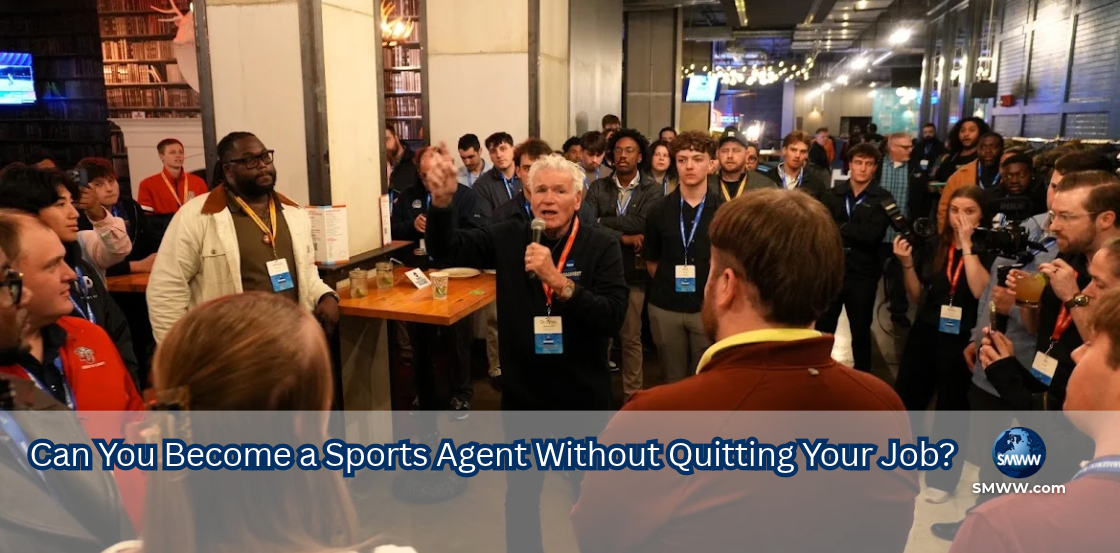
Can You Become a Sports Agent Without Quitting Your Job?

Can You Become a Sports Agent Without Quitting Your Job?
October 21, 2026 by Dr. Lynn Lashbrook

SHARE


Can You Become a Sports Agent Without Quitting Your Job?

Yes, you can begin building a career as a sports agent without leaving your current job. Many aspiring agents start by learning athlete representation, building industry relationships, and developing their knowledge of recruiting and contract negotiations while maintaining full-time employment. Becoming an agent takes time, and keeping your current income can provide financial stability while you prepare for opportunities in professional sports.

Can You Really Become a Sports Agent While Working Full-Time?

You can start preparing for a sports agent career while working full-time, and in some circumstances, you can continue both careers as your client base grows.

Becoming a sports agent does not necessarily mean quitting your job, moving across the country, or immediately opening your own agency.

In fact, maintaining your current career can be a practical way to enter athlete representation.

Many aspiring agents already have valuable professional skills in sales, business, marketing, finance, law, or relationship management. Those abilities can translate directly into the sports industry.

The challenge is learning how to apply them to athlete representation.

A successful sports agent needs more than a passion for sports. They need to understand contracts, recruiting, negotiation, marketing, and how to build lasting relationships with athletes.

The good news? You can begin developing those skills before making a full-time career change.

What Does a Sports Agent Actually Do?

A sports agent represents and advises athletes on professional opportunities, contracts, endorsements, and career decisions.

Depending on the sport and the agent's qualifications, responsibilities may include:

  • Identifying and evaluating prospective clients

  • Building relationships with athletes and their families

  • Negotiating playing contracts when properly certified or authorized

  • Pursuing sponsorships and endorsement opportunities

  • Advising athletes on career development and professional decisions

  • Coordinating with coaches, teams, attorneys, and other professionals

Some responsibilities can be handled remotely or outside traditional business hours. Others require immediate availability, travel, or meetings during the workday.

That is why starting part-time requires realistic expectations, careful planning, and a commitment to putting the athlete's interests first.

How Do You Become a Sports Agent Without Quitting Your Job?

The best way to become a sports agent while maintaining your current career is to develop your knowledge, choose a sport, build relationships, and pursue the appropriate professional qualifications before taking on clients.

Here are five practical steps.

Step 1: Choose the Sport You Want to Represent

Start by identifying the sport you know best or have the strongest connections within.

Whether your interests are in the NFL, NBA, MLB, NHL, soccer, or international sports, each industry has different rules and opportunities.

Understanding the market you want to enter will help you focus your time and resources.

Step 2: Learn the Business of Athlete Representation

Before representing athletes, develop a foundation in recruiting, contract negotiations, collective bargaining agreements, endorsement deals, and professional ethics.

Sports Management Worldwide offers an eight-week online Athlete Management course designed to introduce aspiring agents to these areas.

Step 3: Build Your Network

Relationships are central to athlete representation.

Begin connecting with coaches, scouts, athletic administrators, player development professionals, and experienced agents.

Professional networking, informational interviews, and industry events can help you better understand how athletes navigate their careers.

Any contact with prospective clients must comply with applicable league, player-association, college athletics, and state regulations.

Step 4: Develop Your Professional Skills

Use your available time to practice evaluating athletes, researching professional opportunities, studying contracts, and creating athlete marketing strategies.

If you work in sales, marketing, business development, or another relationship-driven profession, consider how your existing experience can support your future work in sports.

Step 5: Find Experienced Mentors

Learning from established sports agents can help you avoid common mistakes and better understand the responsibilities involved in representing athletes.

Mentorship can also provide insight into certification requirements, client relationships, and the realities of building a sports agency.

You do not need to leave your current job to begin these steps. You need a realistic plan and the discipline to follow it.

How Much Time Does It Take to Become a Part-Time Sports Agent?

There is no universal timeline for becoming a part-time sports agent because the process depends on your experience, professional relationships, certification requirements, and ability to attract clients.

Some aspiring agents spend months developing their knowledge and industry connections before pursuing their first client.

Others enter athlete representation with existing relationships from coaching, athletics, business, or another professional field.

If you're working full-time, consider setting aside time each week for education, professional networking, and researching athletes and opportunities.

Keep in mind that athlete representation can involve time-sensitive decisions. A player may need assistance with an offer, a contract deadline, or a career-changing opportunity during normal business hours.

Starting part-time is possible, but athletes still deserve reliable communication and professional service.

Before accepting clients, make sure you can meet those responsibilities without violating your employer's outside-work policies or creating conflicts of interest.

How SMWW Helps Working Professionals Become Sports Agents

Sports Management Worldwide's Athlete Management course is designed to help aspiring sports agents develop industry knowledge through flexible online education and direct interaction with experienced professionals.

The eight-week course features Dr. Lynn Lashbrook, SMWW President and Founder and NFLPA-certified agent, alongside Joel Corry, former NFL and NBA agent and CBS Sports' Agent's Take analyst.

Students learn about:

  • Athlete recruiting and client relationships

  • Contract negotiations and collective bargaining agreements

  • Endorsements, sponsorships, and athlete marketing

  • Legal and ethical responsibilities

  • Draft preparation and professional opportunities

  • Building and operating a sports agency

The course includes weekly interactive Zoom sessions, online assignments, and recorded discussions for students who cannot attend live.

This structure makes it possible for working professionals to pursue specialized sports agent education without immediately leaving their existing careers.

Learn More About SMWW's Athlete Management Course

What Is the SMWW Agent Advisor Program?

SMWW's Agent Advisor Program provides eligible graduates an opportunity to pursue athlete representation alongside experienced agents through SMWW Agency.

Following the Athlete Management course, graduates can explore becoming Agent Advisors and developing their own relationships with prospective professional athletes.

Depending on the arrangement, Agent Advisors may receive access to agency resources, scouting information, marketing materials, mentorship, and opportunities to participate in client representation with appropriately certified agents.

They may also be eligible to share in agency fees generated through athletes they help recruit, subject to their agreements and applicable regulations.

Importantly, SMWW encourages aspiring Agent Advisors to maintain their current careers while gradually building their clientele.

This approach gives individuals an opportunity to gain experience without depending immediately on income from athlete representation.

Agent Advisor participation is separate from league certification and does not authorize activities reserved for licensed or certified agents. Program eligibility, fees, responsibilities, and compensation depend on the applicable agreement.

For someone looking to transition into sports, the combination of education, mentorship, and a potential agency relationship can provide a structured starting point.

When Should You Consider Becoming a Full-Time Sports Agent?

Consider transitioning into full-time athlete representation when your responsibilities, client relationships, and financial position make the move sustainable.

That decision should not be based simply on completing a course or meeting your first prospective client.

Before leaving your current job, evaluate whether you have a dependable client base, sufficient financial reserves, the appropriate professional credentials, and enough potential business to justify the transition.

Sports agent income is not guaranteed. Building relationships and securing paying clients can take time, and agent fees are subject to agreements and applicable regulations.

Keeping your current career while establishing yourself in sports can give you the flexibility to build the right foundation instead of rushing the process.

Start Building Your Sports Agent Career Today

You do not have to choose between financial stability and pursuing a career in sports.

For aspiring agents, the first step may be learning how athlete representation works, meeting industry professionals, and developing the skills needed to support athletes.

Over time, those efforts can create opportunities to participate in athlete management and potentially transition into a larger role.

At Sports Management Worldwide, the goal is to help people turn their passion for sports into professional opportunities.

With online education, experienced mentors, and potential opportunities through SMWW Agency, aspiring agents can begin preparing for their future while continuing to work in their current profession.

You don't have to quit your job to start pursuing your dream of becoming a sports agent.

Explore SMWW's Athlete Management Course

Frequently Asked Questions

Can you be a sports agent part-time?

Yes, you can work toward a sports agent career part-time and, where permitted, represent athletes while maintaining another job. However, you must comply with league regulations, licensing requirements, employer policies, and your responsibilities to clients.

Do you need a law degree to become a sports agent?

No, a law degree is not universally required to become a sports agent. However, some leagues have specific educational requirements. For example, NFLPA certification generally requires undergraduate and postgraduate degrees or a qualifying negotiating-experience exception.

Can you become a sports agent with no experience?

Yes, you can begin preparing for a sports agent career without previous athlete representation experience. Education, mentorship, networking, and practical industry knowledge can help you build a foundation before pursuing clients.

How do sports agents make money?

Sports agents commonly earn income through negotiated representation fees or commissions, subject to league rules and client agreements. Some agents also work on endorsement and marketing arrangements. Income varies, and finding a client does not guarantee payment.

Can you take SMWW's Athlete Management course while working full-time?

Yes, SMWW's Athlete Management course is delivered online over eight weeks and is designed to accommodate working professionals. Students participate in weekly Zoom sessions, and recordings are available for those unable to attend live. Completing the course provides an SMWW educational certificate, not automatic league-agent certification.

Can SMWW Agent Advisors keep their current jobs?

Yes, SMWW encourages aspiring Agent Advisors to maintain their existing careers while building their athlete representation businesses. Participation and permitted activities remain subject to agency agreements, league regulations, and other applicable requirements.


How to Get a Job in a Baseball Front Office (2026 Guide)

How to Get a Job in a Baseball Front Office (2026 Guide)
October 20, 2026 by Dr. Lynn Lashbrook

SHARE


How to Get a Job in a Baseball Front Office

Getting a job in a baseball front office usually starts with an entry-level baseball operations, analytics, video, or scouting position, often following an internship, fellowship, or seasonal role. Teams look for candidates who understand the game, can demonstrate practical skills, and have built relationships within baseball. You do not need to have played professional baseball, but you do need to show how you can contribute to an organization.

What jobs are in a baseball front office?

Baseball front offices employ professionals in scouting, analytics, player development, video, and baseball operations, along with business departments that support the organization. Some of the most common entry-level positions include:

  • Baseball Operations Assistant or Associate: Supports the front office with research, reports, roster information, transactions, and administrative projects.

  • Research & Development Analyst: Uses baseball statistics, programming, and data analysis to help teams evaluate players and improve decision-making.

  • Video Coordinator or Video Scout: Records, organizes, and analyzes game footage to support scouting, coaching, and player evaluation.

  • Associate Scout or Area Scout: Evaluates amateur or professional players, attends games, and prepares scouting reports for an organization.

  • Player Development Assistant: Supports minor-league players, coaches, and development staff with performance information and organizational projects.

  • TrackMan or Pitch-Tracking Operator: Operates technology that captures pitch movement, velocity, and other performance data during games.

  • Ticket Sales, Marketing, and Communications: Works on the business side of baseball, providing another possible entry point into a professional organization.

Not every baseball front-office job requires the same background. An aspiring analyst may need programming experience, while a future scout may focus on player evaluation and writing reports.

The best starting point is identifying which department matches your skills and interests.

What skills do front offices hire for?

Baseball front offices hire candidates who can evaluate players, work with data and video, communicate clearly, and solve problems. The most valuable skills depend on the position.

Baseball Analytics and Technology

Modern baseball operations departments rely on data to support scouting, player development, and roster decisions.

For analytics-focused positions, employers may look for experience with SQL, Python, or R, along with an understanding of baseball statistics and data visualization.

Familiarity with technologies such as TrackMan and Statcast can also be useful.

Aspiring analysts can build relevant knowledge through programs such as SMWW's Baseball Analytics course.

Scouting and Player Evaluation

Scouting requires the ability to evaluate a player's current skills and project future performance.

Candidates should understand baseball fundamentals, player tools, the traditional 20–80 scouting scale, and how to write useful evaluation reports.

A strong scouting report explains not only what a player does well but also why that player may or may not succeed at a higher level.

Video Analysis

Video professionals need to organize footage, identify important sequences, and communicate useful observations to coaches and scouts.

Experience recording games, tagging plays, and preparing video reports can help demonstrate these skills.

Writing and Communication

Baseball operations employees regularly communicate information to scouts, coaches, analysts, and executives.

The ability to write a clear scouting report or explain a statistical finding can be just as important as collecting the information.

Spanish Language Skills

Spanish proficiency can be a significant advantage in player development and international baseball operations.

Organizations work with players from many Spanish-speaking countries, making effective communication an important part of supporting athletes and staff.

You do not need to master every skill. Focus on developing expertise that matches the baseball career you want.

Where are baseball front office jobs posted?

Baseball front-office jobs are posted on MLB and individual team career pages, sports employment websites, and specialized baseball job boards. Checking multiple sources regularly is more effective than relying on a single website.

Here are several places to begin your search:

  • TeamWork Online: Lists opportunities across professional sports, including MLB and Minor League Baseball organizations.

  • MLB Careers: Provides career opportunities with Major League Baseball and links to individual clubs.

  • MLB Club Career Directory: Helps applicants find employment pages for MLB organizations.

  • Baseball America Careers: Features a subscriber job board aggregating baseball opportunities, including scouting, analytics, and front-office positions.

  • WorkInSports: Provides listings across the sports industry, including baseball operations and business roles.

Search for job titles such as Baseball Operations Assistant, Baseball Operations Intern, Player Development Associate, Video Assistant, Scouting Assistant, and Baseball Research Analyst.

What about the MLB Winter Meetings and PBEO Job Fair?

The MLB Winter Meetings have traditionally been an important networking destination for baseball professionals and job seekers. The Professional Baseball Employment Opportunities (PBEO) Job Fair has also historically connected applicants with professional baseball organizations.

However, the 2026 offseason carries additional uncertainty.

As of October 20, 2026, MLB's current collective bargaining agreement is scheduled to expire on December 1, and a potential lockout could disrupt Winter Meetings activities and some major-league operations. The status of a 2026 PBEO Job Fair should be confirmed before making travel plans.

A lockout could delay certain MLB club decisions, but opportunities with minor-league organizations, colleges, agencies, baseball technology companies, and independent baseball businesses may still be available, depending on the employer.

Do not wait for one event to begin your job search. Monitor openings throughout the offseason and apply directly when opportunities appear.

How do you get noticed?

The best way to get noticed by a baseball front office is to demonstrate useful skills, gain experience, and build genuine professional relationships.

Start with practical experience.

Internships and Fellowships

Look for internships, fellowships, and seasonal roles with MLB organizations, minor-league teams, college programs, and baseball technology companies.

Even positions outside your preferred department can provide exposure to how a professional organization operates.

Informational Interviews

Reach out professionally to people working in baseball operations, scouting, analytics, and player development.

Ask about their career paths, the skills they use, and what they recommend for someone entering the industry.

The goal is to learn and build a relationship, not immediately ask for a job.

The SABR Community

The Society for American Baseball Research (SABR) provides opportunities to connect with baseball researchers, analysts, scouts, and industry professionals.

Regional chapters, research events, and analytics conferences can help aspiring baseball professionals develop knowledge and relationships.

Build a Public Portfolio

One of the strongest ways to demonstrate your ability is to produce work that an employer can review.

For example, you could:

  • Write scouting reports on college or minor-league players.

  • Create an analysis of a player's performance using publicly available statistics.

  • Develop a baseball analytics project using Python, R, or SQL.

  • Produce a video breakdown of a pitcher's mechanics or a hitter's approach.

A portfolio gives an employer evidence of what you can do, even before you have professional baseball experience.

Find Mentors

Mentors can provide feedback on your work, help you understand industry expectations, and introduce you to professional opportunities.

A mentor who knows your abilities may also be able to serve as a professional reference.

The combination of practical experience, demonstrable skills, and trusted relationships can help distinguish you from other applicants.

How SMWW graduates got into baseball

Sports Management Worldwide graduates have entered professional baseball through scouting education, fellowships, networking, and hands-on baseball operations experience.

Two publicly documented examples demonstrate how different career paths can lead into the industry.

Trey Rose — Pittsburgh Pirates Baseball Operations

Trey Rose completed SMWW's Baseball GM & Scouting course in 2016 while developing his baseball knowledge and industry relationships.

After working as an analyst and part-owner of MLB Reports, he secured a fellowship with the Pittsburgh Pirates in 2017.

That opportunity developed into a full-time baseball operations position. By 2022, SMWW publicly identified Rose as the Pirates' Assistant Director of Baseball Operations.

His path illustrates how specialized education, independent baseball work, and a fellowship can combine to create professional opportunities.

Elvis Martinez — St. Louis Cardinals, Minnesota Twins, and Tampa Bay Rays

SMWW graduate Elvis Martinez built his baseball career through networking and a willingness to pursue opportunities within professional organizations.

He entered baseball operations with the St. Louis Cardinals in 2017 before moving into communications and Spanish-language support roles with the Minnesota Twins.

His career subsequently progressed into communications and player relations with the Tampa Bay Rays.

Martinez's experience demonstrates that baseball careers do not always follow a straight line. Skills in communication, relationship-building, and player support can open doors across multiple departments.

These examples show that there is no single route into a baseball front office. Some professionals enter through analytics or scouting, while others build careers through fellowships, communications, and player development.

Explore more baseball career pathways through SMWW's Jobs in Baseball page.

How the Baseball GM & Scouting course helps

SMWW's Baseball GM & Scouting course helps aspiring baseball professionals develop scouting knowledge, practice player evaluation, and learn from experienced industry mentors. The eight-week online program includes live Zoom discussions with former Los Angeles Dodgers General Manager Dan Evans and 40-year Dodgers scout Hank Jones, along with training in scouting reports, player evaluation, baseball operations, and front-office decision-making. Students can develop practical work samples and professional relationships, while mentors may provide references based on their knowledge of a student's work.

Learn more about the Baseball GM & Scouting course and review the Baseball GM & Scouting FAQ.

Frequently Asked Questions

How do I get a job in baseball operations?

Start by applying for baseball operations internships, fellowships, seasonal positions, or entry-level assistant roles while building relevant skills and industry connections. Experience in scouting, analytics, video analysis, or player development can strengthen your application.

Create examples of your work, monitor baseball job boards, and connect with professionals who can provide advice about entering the industry.

Do you need to have played baseball to work in a front office?

No, you do not need to have played professional baseball to work in a baseball front office. Playing experience can be helpful for certain roles, but organizations also hire professionals with backgrounds in statistics, technology, business, communications, and research.

What matters is whether you have the knowledge and skills needed for the position.

What does a baseball operations assistant do?

A baseball operations assistant supports a team's front-office staff with research, data, reports, administrative tasks, and player-related information. Depending on the organization, responsibilities may include maintaining databases, preparing scouting materials, assisting with transactions, coordinating projects, and supporting analysts or player personnel executives.

It is one of several possible entry-level paths into baseball operations.

How much do entry-level baseball operations jobs pay?

Entry-level baseball operations assistant salaries vary by team, location, and employment type, but Salary.com estimated approximately $42,374 annually at the 10th percentile in October 2026.

The same source estimated an average baseball operations assistant salary of $44,256 per year in the United States.

These figures are market estimates, not guaranteed starting salaries. Internships, seasonal positions, and part-time roles may pay significantly less, so applicants should review each employer's posted compensation.

Source: Salary.com — Baseball Operations Assistant Salary, October 2026.

Do I need a degree in sports management to work in baseball?

No, a sports management degree is not universally required to work in baseball operations. Teams hire candidates with educational backgrounds in statistics, computer science, business, economics, communications, and other fields.

Relevant experience, baseball knowledge, technical skills, and professional relationships can all strengthen an application.

Specialized education, including SMWW's Baseball GM & Scouting and Baseball Analytics courses, can help candidates develop baseball-specific knowledge alongside their existing qualifications.


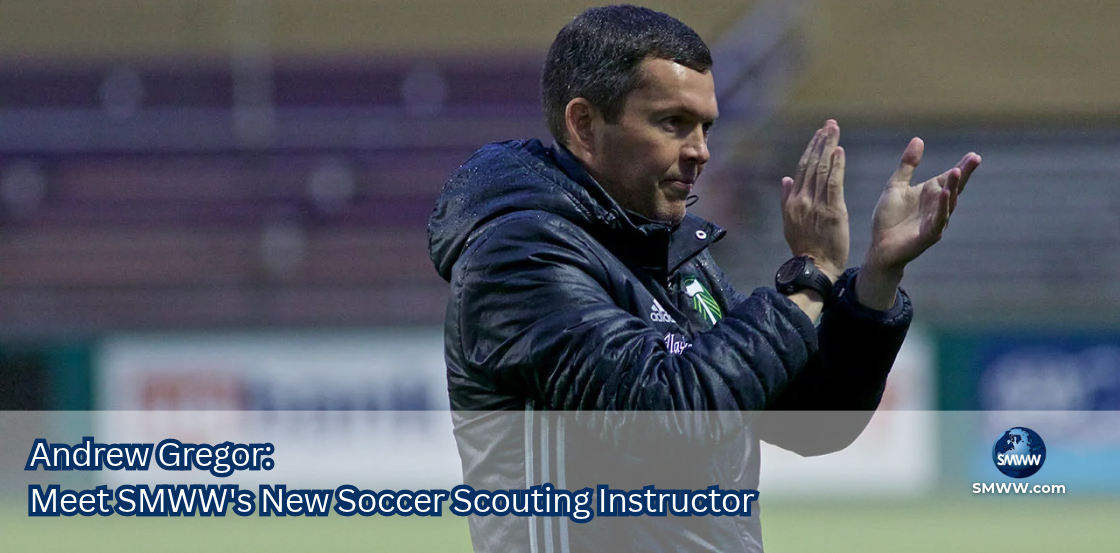
Subscribe to RSS - blogs